
Humanity & security
What is security, and why do we need it?
Security is the care, preparation and action that help protect people, places and the things we depend on. At its heart is a simple purpose: helping people live their everyday lives with greater confidence.
Start with people
Safety creates room for life.
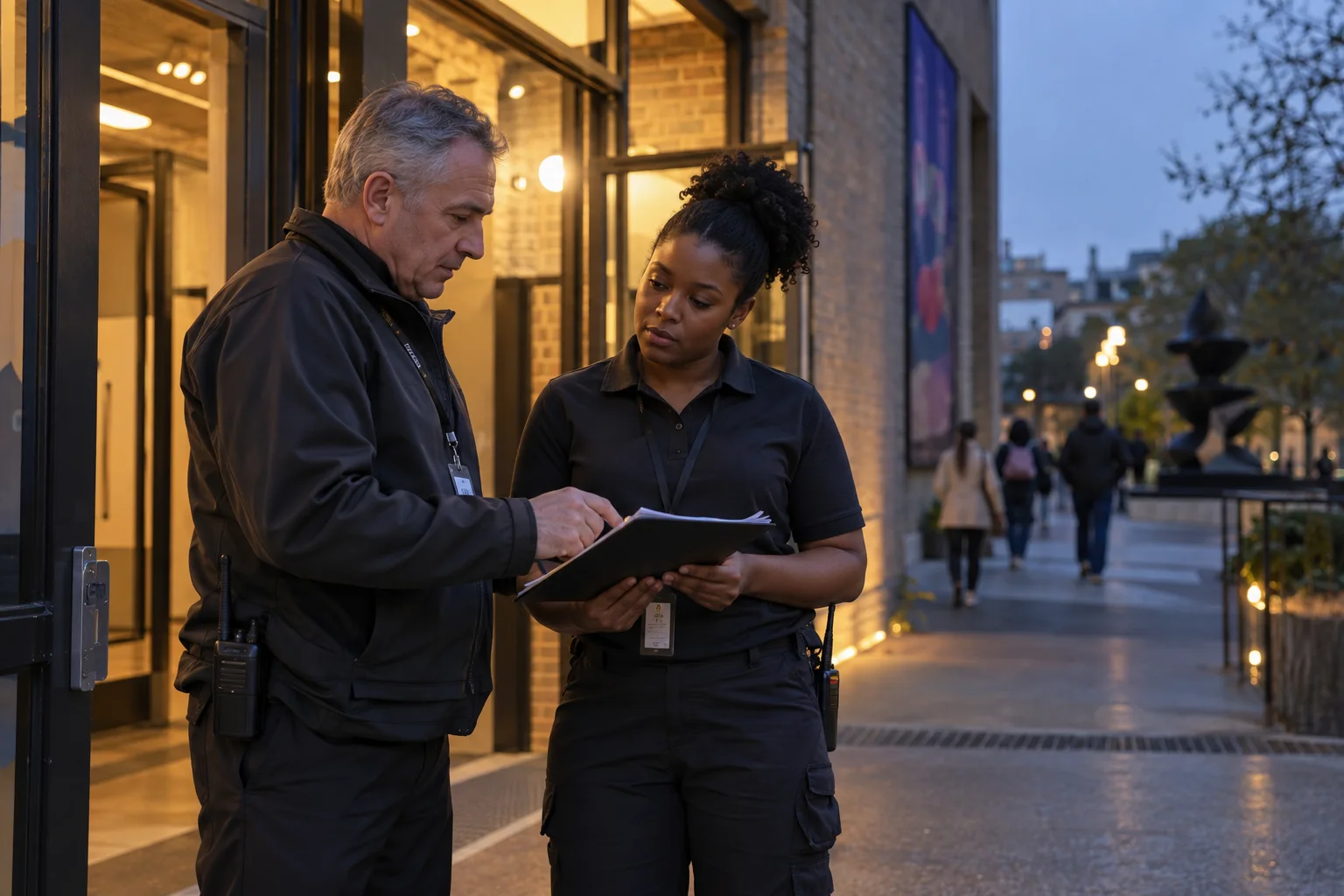
A child arriving at school. A team opening a shop. Friends meeting for an evening out. Ordinary moments depend on people being able to use a place with confidence.
The wider idea of human security includes people’s livelihoods, health and dignity. Private security is one part of that picture: people working with organisations and communities to help protect the places we share.
United Nations: what human security meansA few moments from a working day
Small actions. Human impact.
Choose a setting to see the role.

The start of a working day
A welcome with a purpose.
- The action
- Greet a visitor, check who they are meeting and explain how to reach reception.
- Why it matters
- The visitor feels orientated. The team knows who is in the building.
Communication · Attention · Access procedures
Illustrative work situations. Your duties, training, authority and site procedures depend on the role and location.
The philosophy of the work
Responsibility begins with how you treat people.
Protect dignity
Treat each person with respect. Explain what you are asking and listen. Understand the situation through conversation and the same fair process for each person.
Prevent harm
Pay attention to your surroundings. A clear walkway, an early report or a calm conversation can be part of keeping a place safe.
Use judgement
Understand your role, training and local rules. Recognise when a situation needs a supervisor, specialist support or emergency services.
Earn trust
Be consistent, keep information confidential and record events accurately. Follow through on the responsibilities you have been given.
Keep learning
Reflect on your shift. Ask for feedback. Practise communication and develop the knowledge needed for the work you want to do next.
A moment to think
Your first skill is paying attention.
A visitor arrives for an appointment and looks confused. What is a useful first step?
An introductory reflection. Workplace procedures and required training provide the detail for your role.
A career you can develop
Start with the foundations. Keep growing.
Prepare
Understand the local route. Explore the work and practise everyday situations.
Qualify
Complete the training, checks and applications required for your chosen role.
Build experience
Learn the site. Work with colleagues. Develop reliable habits through each shift.
Explore your next step
Experience and further training may open routes into supervision, operations or specialist work.
Requirements and progression vary by location, employer and role.
Explore the ideas and the profession
These sources provide context from the UN, the United States and the United Kingdom. Local requirements belong in your country guide.
Could this be your next chapter?
Start with where you want to work. Understand the requirements, the training and the possibilities.
Our story